
About Pink
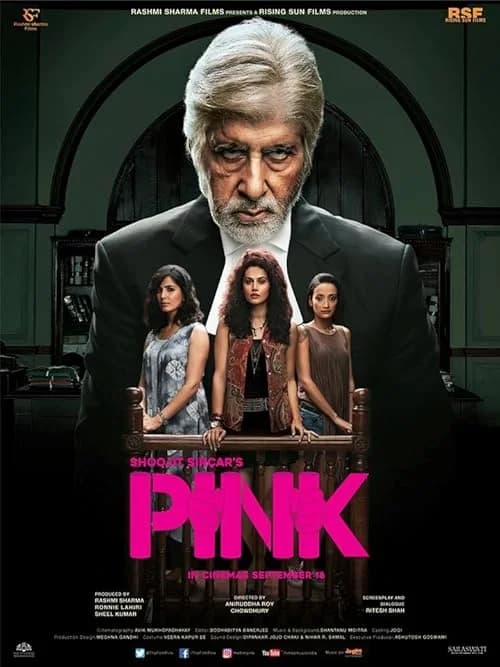
Pink (2016) is a gripping Indian courtroom drama that transcends its genre to deliver a powerful social message. Directed by Aniruddha Roy Chowdhury, the film follows three independent young women in Delhi—Minal, Falak, and Andrea—whose lives are shattered after a traumatic encounter with influential men. When they find themselves falsely accused of a crime, retired lawyer Deepak Sehgal, brilliantly portrayed by Amitabh Bachchan, emerges from his reclusive life to defend them in a legal battle that exposes deep-seated societal prejudices.
The film's strength lies in its taut screenplay and exceptional performances. Bachchan delivers one of his career-best roles, embodying weary determination and moral fury. Taapsee Pannu as Minal provides a nuanced performance of resilience and trauma, while the supporting cast creates a believable world of privilege and power dynamics. Chowdhury's direction maintains relentless tension, using the courtroom not just as a setting but as a crucible where modern India's attitudes toward women are put on trial.
What makes Pink essential viewing is its urgent relevance. It masterfully tackles issues of consent, victim-blaming, and class privilege without becoming didactic. The courtroom sequences are electrifying, blending legal procedural elements with emotional depth. The film's climax is both cathartic and thought-provoking, leaving viewers with lasting questions about justice and morality. For anyone interested in cinema that combines social commentary with suspenseful storytelling, Pink remains a landmark film that's as entertaining as it is important.
The film's strength lies in its taut screenplay and exceptional performances. Bachchan delivers one of his career-best roles, embodying weary determination and moral fury. Taapsee Pannu as Minal provides a nuanced performance of resilience and trauma, while the supporting cast creates a believable world of privilege and power dynamics. Chowdhury's direction maintains relentless tension, using the courtroom not just as a setting but as a crucible where modern India's attitudes toward women are put on trial.
What makes Pink essential viewing is its urgent relevance. It masterfully tackles issues of consent, victim-blaming, and class privilege without becoming didactic. The courtroom sequences are electrifying, blending legal procedural elements with emotional depth. The film's climax is both cathartic and thought-provoking, leaving viewers with lasting questions about justice and morality. For anyone interested in cinema that combines social commentary with suspenseful storytelling, Pink remains a landmark film that's as entertaining as it is important.