About Thirteen
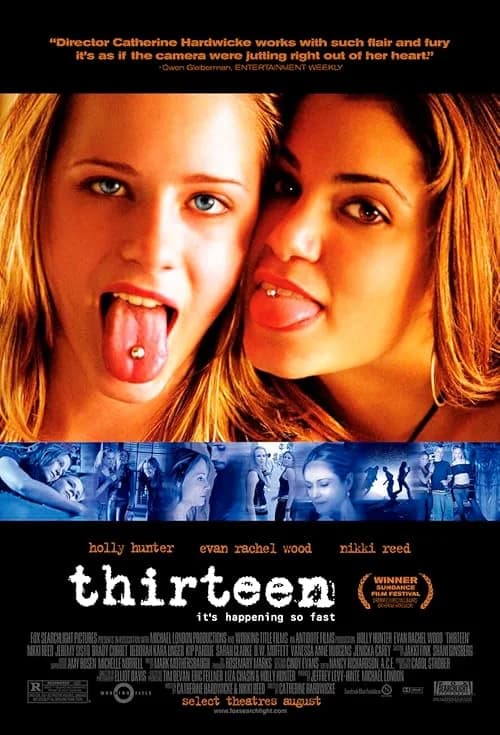
Thirteen (2003) is a brutally honest and unflinching coming-of-age drama that pulls no punches in depicting adolescent turmoil. Directed by Catherine Hardwicke and co-written by Hardwicke and then-13-year-old Nikki Reed (who also stars), the film follows Tracy, a smart but impressionable seventh-grader whose life unravels after she befriends Evie, the popular and dangerously charismatic girl at school. What begins as a quest for social acceptance quickly descends into a chaotic whirlwind of shoplifting, drug experimentation, sexual exploration, and piercing rebellion, all of which violently strains her relationship with her struggling single mother, Melanie.
The film's power lies in its raw authenticity. Evan Rachel Wood delivers a stunning, vulnerable performance as Tracy, perfectly capturing the terrifying speed of a child's loss of innocence. Nikki Reed is equally compelling as the manipulative and deeply damaged Evie, while Holly Hunter earned an Academy Award nomination for her portrayal of a mother desperately trying to hold her family together. Hardwicke's direction is intimate and urgent, using handheld cameras and a gritty aesthetic to immerse the viewer in Tracy's disorienting descent.
Viewers should watch Thirteen for its courageous refusal to sanitize teenage life. It's not an easy watch, but it's an important and emotionally resonant one. The film serves as a poignant exploration of peer pressure, maternal love, and the fragile bridge between childhood and adolescence. Its themes remain painfully relevant, making it a essential film for anyone interested in powerful, character-driven dramas about the complexities of growing up.
The film's power lies in its raw authenticity. Evan Rachel Wood delivers a stunning, vulnerable performance as Tracy, perfectly capturing the terrifying speed of a child's loss of innocence. Nikki Reed is equally compelling as the manipulative and deeply damaged Evie, while Holly Hunter earned an Academy Award nomination for her portrayal of a mother desperately trying to hold her family together. Hardwicke's direction is intimate and urgent, using handheld cameras and a gritty aesthetic to immerse the viewer in Tracy's disorienting descent.
Viewers should watch Thirteen for its courageous refusal to sanitize teenage life. It's not an easy watch, but it's an important and emotionally resonant one. The film serves as a poignant exploration of peer pressure, maternal love, and the fragile bridge between childhood and adolescence. Its themes remain painfully relevant, making it a essential film for anyone interested in powerful, character-driven dramas about the complexities of growing up.