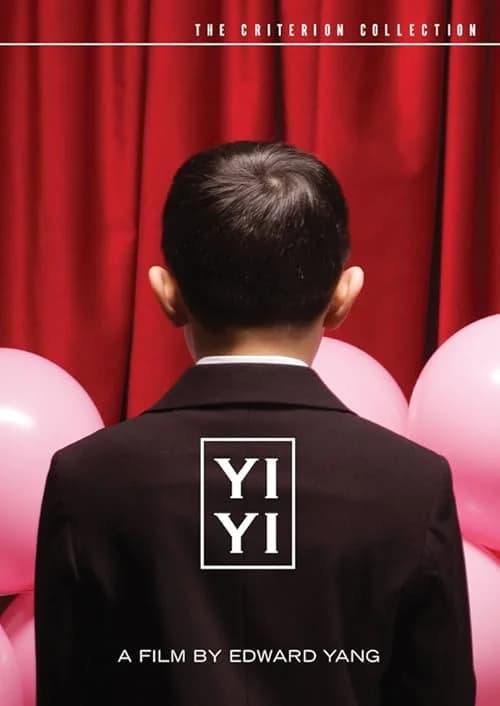
About Yi Yi
Yi Yi (A One and a Two) is Taiwanese director Edward Yang's profound 2000 drama that offers a gentle, observant portrait of a middle-class family in Taipei over the course of a pivotal year. The film centers on NJ, a man facing a moral crisis at work and reconnecting with a lost love; his teenage daughter Ting-Ting, experiencing first love and heartbreak; and his eight-year-old son Yang-Yang, who photographs the backs of people's heads to show them what they cannot see themselves. Through these interconnected stories, Yang explores universal themes of memory, regret, and the search for meaning with remarkable subtlety and emotional depth.
The ensemble cast delivers beautifully restrained performances, with Wu Nien-jen as NJ embodying quiet desperation and Kelly Lee as Ting-Ting capturing adolescent vulnerability. Yang's direction is masterful in its patience, using long takes and carefully composed frames to immerse viewers in the family's everyday rhythms. The 173-minute runtime feels essential, allowing characters and themes to breathe and resonate.
Winner of Best Director at Cannes, Yi Yi is considered one of the greatest films of the 21st century for its humanistic wisdom and cinematic elegance. Viewers should watch this film not for dramatic plot twists, but for its profound accumulation of life's small moments—the disappointments, connections, and quiet epiphanies that define our existence. It's a moving, contemplative experience that lingers long after the final frame, offering perspective on the full spectrum of family life.
The ensemble cast delivers beautifully restrained performances, with Wu Nien-jen as NJ embodying quiet desperation and Kelly Lee as Ting-Ting capturing adolescent vulnerability. Yang's direction is masterful in its patience, using long takes and carefully composed frames to immerse viewers in the family's everyday rhythms. The 173-minute runtime feels essential, allowing characters and themes to breathe and resonate.
Winner of Best Director at Cannes, Yi Yi is considered one of the greatest films of the 21st century for its humanistic wisdom and cinematic elegance. Viewers should watch this film not for dramatic plot twists, but for its profound accumulation of life's small moments—the disappointments, connections, and quiet epiphanies that define our existence. It's a moving, contemplative experience that lingers long after the final frame, offering perspective on the full spectrum of family life.