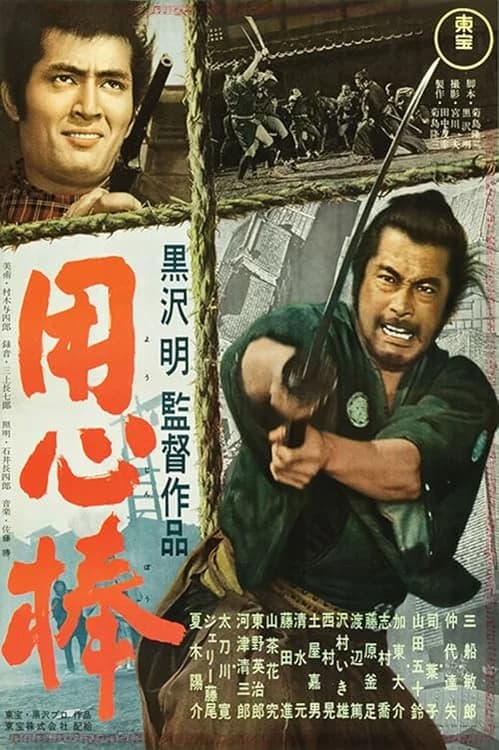
About Yojimbo
Akira Kurosawa's 1961 masterpiece Yojimbo stands as one of the most influential films in cinema history, blending thrilling action with sharp social commentary. The film follows a nameless, wandering ronin (Toshiro Mifune) who arrives in a desolate town controlled by two equally corrupt merchant gangs. Seeing an opportunity, the cunning samurai decides to play both sides against each other, offering his services as a bodyguard (yojimbo) to the highest bidder while systematically dismantling both factions from within.
Toshiro Mifune delivers one of his most iconic performances as the cynical, resourceful warrior who scratches his shoulder and displays a weary intelligence that makes him instantly compelling. Kurosawa's direction is masterful, creating a tense, atmospheric world where every frame feels meticulously composed. The cinematography by Kazuo Miyagawa captures the dusty streets and shadowy interiors with striking clarity, while Masaru Sato's unconventional score adds a modern, almost western flavor to the feudal Japanese setting.
What makes Yojimbo essential viewing is its perfect balance of entertainment and artistry. The action sequences remain thrilling decades later, particularly the final showdown that has been referenced in countless films. Beyond the surface-level excitement, the film offers a clever critique of greed, corruption, and human nature. Kurosawa's genius lies in how he transforms a simple premise into a timeless narrative about one man's attempt to restore balance through chaos. For fans of samurai cinema, westerns, or simply great storytelling, Yojimbo remains an unmissable cinematic achievement that continues to inspire filmmakers worldwide.
Toshiro Mifune delivers one of his most iconic performances as the cynical, resourceful warrior who scratches his shoulder and displays a weary intelligence that makes him instantly compelling. Kurosawa's direction is masterful, creating a tense, atmospheric world where every frame feels meticulously composed. The cinematography by Kazuo Miyagawa captures the dusty streets and shadowy interiors with striking clarity, while Masaru Sato's unconventional score adds a modern, almost western flavor to the feudal Japanese setting.
What makes Yojimbo essential viewing is its perfect balance of entertainment and artistry. The action sequences remain thrilling decades later, particularly the final showdown that has been referenced in countless films. Beyond the surface-level excitement, the film offers a clever critique of greed, corruption, and human nature. Kurosawa's genius lies in how he transforms a simple premise into a timeless narrative about one man's attempt to restore balance through chaos. For fans of samurai cinema, westerns, or simply great storytelling, Yojimbo remains an unmissable cinematic achievement that continues to inspire filmmakers worldwide.